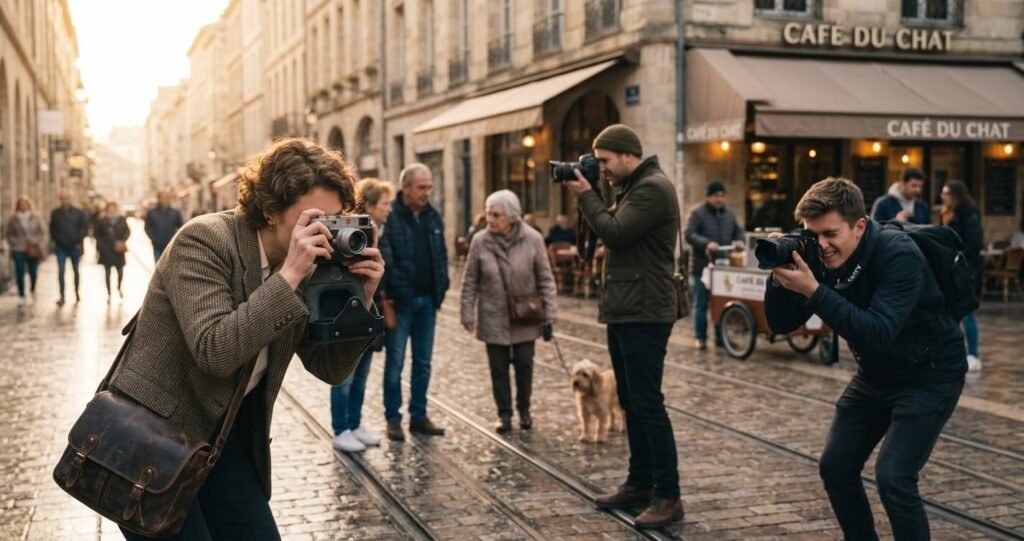
Street photography turns ordinary moments into meaningful photographs. A busy market, a person crossing a road, sunlight falling between buildings, or a quiet moment at a street corner can become a memorable image when captured at the right time. The best part is that anyone can begin with a basic camera or smartphone.
For beginners, learning the techniques, choosing suitable equipment, and understanding how to observe everyday life can make a significant difference. This guide explains the essential skills, practical camera settings, creative approaches, and equipment choices needed to capture better street images.
What Is Street Photography?
Street photography is a style of photography that documents everyday life in public spaces. It often focuses on people, architecture, urban environments, interesting light, and spontaneous interactions.
Unlike carefully arranged portraits, many street photographs capture unscripted moments. However, this style does not always require photographing strangers. Empty streets, unusual shadows, reflections, and everyday objects can also tell compelling visual stories.
Experienced street photographers pay attention to timing, composition, light, and the relationship between different elements in a scene. A simple photograph can become powerful when these elements come together naturally.
How to Shoot Street Photography: Essential Techniques
Learning how to shoot street photography begins with observation rather than expensive equipment. Instead of walking around continuously taking random pictures, a photographer can choose an interesting location and wait for a meaningful moment.
Several techniques can help beginners develop their skills:
- Look for interesting light: Early morning and late afternoon often provide softer light and longer shadows.
- Anticipate movement: Watch how people move through a scene and prepare for an interesting interaction.
- Keep the composition simple: Avoid distracting backgrounds that compete with the main subject.
- Experiment with perspective: Photograph from different heights and angles to discover more interesting compositions.
- Practice patience: Some locations become more interesting when the right person, movement, or lighting enters the frame.
A useful exercise is to choose one street corner and capture ten different compositions without changing locations. This encourages careful observation and helps photographers recognize details they might otherwise overlook.
Street Photography Tips for Beginners
For anyone learning street photography tips for beginners, confidence and consistency are just as important as technical knowledge.
Start in Familiar Places
Local markets, shopping streets, parks, and public squares provide plenty of opportunities to practice. Familiar locations also help photographers feel more comfortable while learning to observe people and movement.
Use a Simple Camera Setup
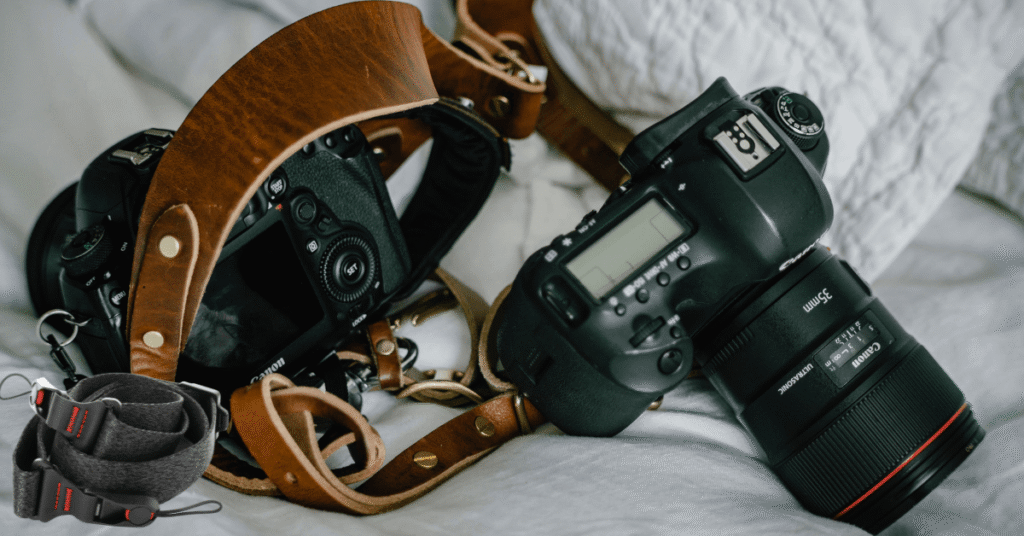
A complicated setup can slow down the process. A moderate wide-angle lens, a comfortable camera strap, and a few basic settings are often enough to begin.
Learn to Anticipate Moments
Strong photographs frequently depend on timing. A person stepping into a patch of sunlight or two people passing beneath an interesting sign may create a brief visual connection.
Review Photographs Regularly
Reviewing images helps identify problems with focus, framing, exposure, and timing. Even unsuccessful photographs can reveal what needs improvement.
Street Photography Settings That Work
The best street photography settings depend on available light, subject movement, and the desired appearance of the image. The following values provide useful starting points for digital cameras.
| Situation | Shutter speed | Aperture | ISO |
|---|---|---|---|
| Bright daylight | 1/250–1/1000 sec | f/5.6–f/8 | 100–400 |
| Moving people | 1/250–1/500 sec | f/4–f/8 | Auto or 400–1600 |
| Low-light streets | 1/125–1/250 sec | f/1.8–f/2.8 | 800–3200 |
| Static nighttime scenes | 1/60 sec or slower | f/1.8–f/4 | 800–6400 |
These are approximate starting points, not fixed rules. Camera performance, lens stabilization, subject movement, and available light can all affect the results.
How to Shoot Manual Street Photography
Manual exposure gives photographers direct control over shutter speed, aperture, and ISO. It can be particularly useful when lighting remains consistent for several photographs.
For example, a photographer working in bright sunlight might start at 1/500 sec, f/8, and ISO 200. The exposure can then be adjusted after reviewing a test photograph.
Beginners who are not comfortable with full manual exposure can use aperture priority or shutter priority. These modes simplify the process while allowing control over an important creative setting.
How to Shoot Street Photography at Night
Nighttime photography introduces challenges because streets may contain bright signs, dark backgrounds, and moving subjects.
A fast lens with an aperture of f/1.8 or f/2.8 allows more light to reach the sensor. Raising ISO can also help maintain a shutter speed fast enough to photograph pedestrians without excessive motion blur.
Streetlights, shop windows, vehicle lights, and illuminated signs provide natural lighting opportunities. Rather than trying to brighten every shadow, photographers can use contrast between light and darkness to create atmosphere.
How to Take Street Photography of People
Photographing people can feel intimidating at first. A relaxed approach, respectful behavior, and careful observation make the experience easier.
Photographers can begin by photographing people from a comfortable distance, including them within a wider architectural scene. This creates context without making every image a close-up portrait.
To understand how to take street photo compositions that feel natural, consider the background, the direction of movement, and the subject’s relationship with nearby objects.
A person walking through a beam of sunlight, for example, may create a more compelling photograph than a tightly framed picture with no surrounding context.
Respect also matters. Photographers should avoid intrusive behavior, particularly when people are vulnerable or engaged in private activities. Permission may be appropriate for close portraits, sensitive situations, or intended commercial use.
How to Take Better Street Photography With a Smartphone
Modern smartphones are useful tools for learning composition and timing. Their small size makes them convenient for everyday photography, while built-in editing tools allow quick adjustments.
How to Take Street Photography With iPhone
An iPhone can produce excellent street images when its camera is used thoughtfully. The standard camera mode is often sufficient for beginners.
A few practical techniques include:
- Use the main camera for consistent image quality.
- Tap the subject to set focus and adjust exposure when necessary.
- Keep the lens clean to prevent hazy photographs.
- Use grid lines to help with composition.
- Avoid excessive digital zoom when possible.
- Explore black-and-white processing for scenes with strong contrast.
For moving subjects, good timing and a steady grip are often more valuable than using numerous filters. Capturing several frames can also increase the chance of recording the right expression or movement.
How to Take Street Photography With Rebel T7
The Canon EOS Rebel T7 is an entry-level DSLR that can be used for street photography. Its optical viewfinder, interchangeable lenses, and manual controls offer a practical learning platform.
A standard zoom lens can cover a variety of scenes, while a lightweight 24mm or 35mm equivalent field of view can work well for environmental street images. On the Rebel T7’s APS-C sensor, a 24mm lens provides approximately a 38mm-equivalent field of view.
For daylight photography, starting with a shutter speed around 1/250 sec and an aperture of f/5.6 can be helpful. ISO can then be adjusted according to the light.
The most important factor is learning to operate the camera comfortably enough to respond quickly when an interesting moment appears.
Street Photography Ideas to Practice
Creative exercises can help photographers develop a personal style without needing to travel to famous destinations.
Here are several street photography ideas worth trying:
- Shadows and silhouettes: Photograph people moving through strong sunlight or beneath streetlights.
- Reflections: Use shop windows, puddles, and reflective buildings to create layered compositions.
- Local markets: Capture interactions, colorful displays, and the rhythm of everyday commerce.
- Geometric patterns: Look for repeating windows, road markings, stairs, and architectural lines.
- Black-and-white scenes: Emphasize contrast, shape, and expression without the distraction of color.
- Rainy weather: Photograph umbrellas, wet roads, and reflections after rainfall.
- Everyday details: Focus on hands, bicycles, signs, footwear, or objects that reveal something about a location.
A useful challenge is to select one theme for an entire photo walk. Concentrating on reflections or shadows, for example, helps train the eye to notice patterns consistently.
Best Film Cameras for Street Photography
Digital cameras are convenient, but film photography offers a different creative experience. Film encourages deliberate shooting because every exposure has a cost, and the final image depends on both the camera and the film stock.
The best film cameras for street photography are generally portable, comfortable to operate, and reliable enough to use while moving through busy environments.
Compact 35mm Film Cameras
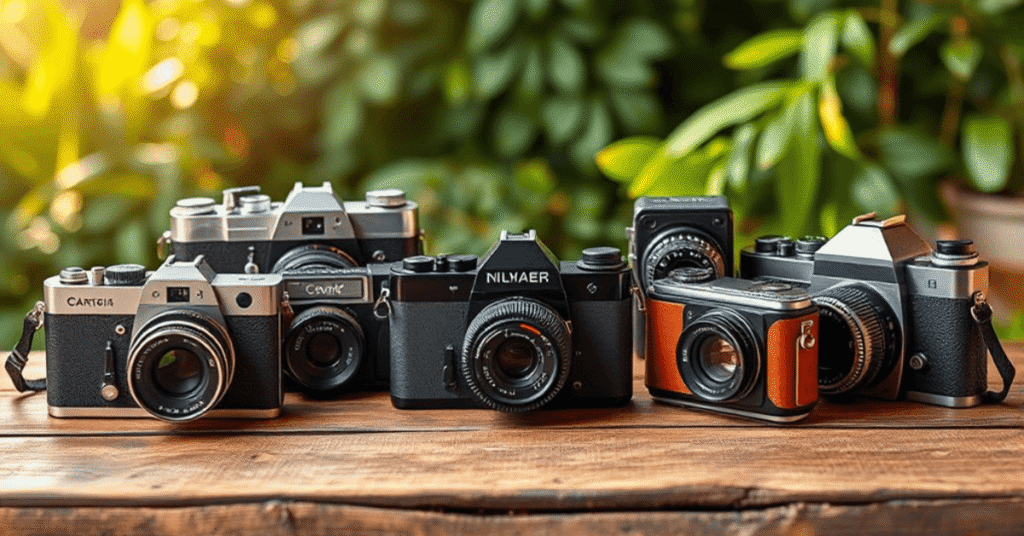
Compact 35mm film cameras are useful for photographers who value portability and simple controls. Popular models to research include the Olympus XA series, Canon Sure Shot models, and Konica Hexar AF.
Their small bodies make them convenient for everyday carry. However, autofocus performance, lens quality, flash options, and repairability vary by model.
Rangefinder Cameras for Street Photography
Rangefinder cameras for street photography appeal to photographers who prefer manual focusing and a traditional shooting experience. Models such as the Leica M series and Canon P offer different price points and operating characteristics.
A rangefinder does not use the reflex mirror mechanism found in an SLR, which can contribute to a quieter shooting experience. Nevertheless, actual shutter noise varies between camera models.
Best Lens for Street Photography Film
The best lens for street photography film depends on the scene and personal style. A 35mm lens is a versatile choice for environmental photographs, while a 50mm lens can provide a more focused view of people and details.
For photographers using film SLRs, the best lens for street photography film is not necessarily the most expensive one. A clean, reliable lens with a useful focal length can be more practical than specialized equipment.
Mechanical Film Cameras Without Batteries
Mechanical film cameras without batteries can be attractive for photographers who want a traditional, hands-on experience. Certain models can operate their shutter mechanically without a battery, although their light meters may still require power.
Before buying a used camera, it is important to check shutter speeds, film transport, focusing, light seals, and overall condition.
Quiet Shutter Film Cameras
Quiet shutter film cameras are particularly appealing when discreet operation is important. Compact leaf-shutter cameras and some rangefinders may be quieter than traditional SLRs, although no camera is completely silent.
Photographers should compare actual handling and shutter sound rather than relying on a camera’s reputation alone.
Street Photography Rules, Ethics, and Respect
There is no single artistic rulebook that every street photographer must follow. However, a few practical principles help produce stronger images while respecting others.
First, avoid interfering with the moment being photographed. Second, be mindful of cultural expectations and personal boundaries. Third, understand the laws that apply to photography and publishing images in the relevant location.
Rules concerning photography, privacy, restricted locations, and commercial use differ between countries. Permission or additional authorization may be necessary in some situations. Photographers should check local requirements rather than assuming that every photograph taken in a public place can be published without restriction.
Ethical street photography balances creative freedom with consideration for the people appearing in the frame.
Learning Street Photography Online
Photographers who want to improve their skills can learn street photography online through tutorials, camera manuals, photography communities, and image-analysis exercises.
A street photography manual PDF can be useful as a reference for exposure, focusing, and composition, provided it comes from a reputable and lawful source. Camera manufacturers’ official manuals are especially helpful when learning model-specific controls.
Studying established street photographers can also help beginners understand how timing, framing, and light work together. Rather than copying an entire style, they can analyze individual photographs and experiment with the underlying techniques.
For those interested in video, learning how to shoot street video involves additional considerations, including stabilization, audio, frame rates, and recording permissions. A point-of-view approach can also be explored by learning how to shoot street photography POV, where the camera captures a scene from the photographer’s own perspective.
Online tutorials can introduce these concepts, but regular practice remains essential. A short photo walk followed by a careful review of the results can teach lessons that watching videos alone cannot provide.
FAQ,s
What is the best camera for street photography?
The best camera is one that is portable, dependable, and comfortable to operate. Entry-level DSLRs, mirrorless cameras, compact cameras, and smartphones can all produce strong results. The choice depends on budget, preferred shooting style, and lighting conditions.
Can beginners do street photography with a phone?
Yes. A smartphone is enough to learn composition, timing, light, and visual storytelling. Beginners can develop these skills before investing in a dedicated camera.
What is the best lens for street photography?
A 35mm-equivalent field of view is a versatile starting point for capturing people and their surroundings. A 50mm-equivalent view can work well for tighter compositions. The ideal choice depends on available space and personal preference.
Which camera settings work best for street photography?
For daytime scenes, a shutter speed around 1/250 sec, an aperture of f/5.6 to f/8, and a suitable ISO provide a useful starting point. Faster shutter speeds may be needed for quick movement, while low-light scenes often require a wider aperture or higher ISO.
Conclusion
Street photography is a rewarding way to explore everyday life through a camera. It does not require expensive equipment, famous locations, or perfect technical knowledge. Instead, strong images develop through observation, patience, thoughtful composition, and consistent practice.
From smartphone photography and manual exposure to traditional film cameras, every approach offers opportunities to learn. By exploring familiar streets, experimenting with light, and treating subjects respectfully, photographers can gradually develop their own visual style and capture more meaningful moments.